








طراحی بتن؛ اصول سازهای، شیمی مصالح و الزامات اجرایی
This article is adapted from the supplied introduction to C. Dale Buckner’s concrete-design review book. Supplementary explanations connect structural calculations with cement chemistry, durability, and construction quality. References to ACI 318-08 and ACI 318-11 describe the edition discussed in the source
 Purpose and Scope
Concrete Design brings together structural analysis, material selection, reinforcement detailing, and construction requirements. Its objective is to achieve adequate strength, stability, serviceability, and durability under the conditions expected during construction and use.
Buckner’s book was prepared primarily as a review resource for engineers studying structural engineering examinations. It also provides introductory guidance for students learning reinforced and prestressed concrete.
The supplied edition covers flexure, shear, torsion, axial loading, serviceability, reinforcement development, floor systems, prestressing, and seismic criteria. Worked examples and practice problems demonstrate how assumptions and code provisions lead to a design solution.
A review manual supports learning, but it does not replace the governing code, project specifications, or engineering judgment. Every calculation must remain consistent with the structural system and applicable requirements.
Concrete Design begins with a clear load path. Loads pass through slabs, beams, walls, columns, connections, and foundations before reaching the supporting ground.
The analysis should represent geometry, restraint, continuity, stiffness, and support conditions realistically. An incorrect support assumption can produce misleading internal forces even when the arithmetic is corre.
Members may experience bending, shear, torsion, and axial force simultaneously. Their interaction must be considered where relevant rather than treating every action as an unrelated calculation
Construction stages also require attention. Early loading, temporary supports, formwork removal, and lifting of precast members can introduce conditions that differ from those of the completed structure
The calculation record should identify assumptions and explain how they are reflected in the drawings
| Design topic | Main engineering question | Related detailing requirement |
|---|---|---|
| Flexure | Can the section resist the applied moment? | Longitudinal reinforcement and anchorage |
| Shear and torsion | Can forces cross critical regions safely? | Transverse reinforcement and force-transfer details |
| Axial loading | How do compression and bending interact? | Stability, confinement, and slenderness assessment |
| Serviceability | Will the structure remain functional? | Deflection and crack control |
| Durability | Can performance be maintained under exposure? | Cover, material selection, curing, and protection |

Concrete Design should recognize that material properties develop through chemical reactions and change with age.
When cement reacts with water, hydration produces calcium silicate hydrate, portlandite, and other products. Calcium silicate hydrate, abbreviated C-S-H, provides much of the binding structure. Its composition varies, so one fixed molecular formula cannot represent every cementitious system.
Water content, temperature, binder composition, and curing influence hydration and pore development. Excessive water can leave a more connected capillary network. However, reducing water without maintaining workability can create placement defects that offset the intended benefit.
Supplementary cementitious materials can alter hydration, heat development, interfaces, and transport properties. Their effects depend on material characteristics, dosage, temperature, and curing.
Consequently, specified compressive strength does not independently establish tensile behaviour, shrinkage, creep, or chemical resistance.
Concrete Design must connect calculated properties with a mixture that can be transported, placed, consolidated, and cured
The water-to-binder ratio is important, but it is only one variable. Aggregate grading, particle shape, paste volume, admixture compatibility, and delivery conditions also influence performance.
Polycarboxylate-based water reducers disperse particles and can help obtain suitable consistency without excessive mixing water. Their effectiveness depends on the binder and other constituents. Dosage should therefore be established through appropriate trials rather than assumed universally.
Increasing cement content is not automatically an improvement. It may change heat generation, paste volume, deformation, and cost.
The mixture should satisfy the required fresh and hardened properties under representative production conditions. Laboratory success alone does not demonstrate satisfactory performance in congested reinforcement or difficult placement locations
Concrete Design uses reinforcement to resist tensile forces, distribute cracking, provide confinement, and fulfil other structural functions.
Force transfer between steel and concrete depends on bond. For deformed bars, mechanical interlock is important alongside adhesion and friction. Cover, spacing, confinement, bar geometry, and concrete condition affect the transfer mechanism.
Adequate development and anchorage are essential. Providing sufficient steel area does not complete the design if the required force cannot be transferred into the member.
Similar thermal expansion between steel and concrete is beneficial, but it is not the sole explanation for reinforced-concrete behaviour.
Bar arrangements must also allow concrete placement and consolidation. Congestion can produce voids or poorly compacted regions, compromising bond and durability. Constructability should therefore be reviewed alongside sectional resistance.
Concrete Design requires separate consideration of ultimate resistance and serviceability.
A member can satisfy a strength calculation while developing excessive deflection or unacceptable cracking. Conversely, acceptable deflection does not independently establish adequate ultimate capacity
Cracking changes stiffness and redistributes stress. Long-term deformation also involves creep and shrinkage, which depend on humidity, member dimensions, age at loading, and material behaviour
Tensile strength should not be treated as a fixed percentage of compressive strength. Direct-tension, splitting-tension, and flexural tests involve different stress distributions and measure different responses
Reinforcement generally distributes cracks and limits their widths; it does not guarantee an uncracked member. Crack-control requirements must reflect exposure, structural function, and the governing design provisions
Higher compressive strength alone does not ensure greater ductility or improved post-cracking performance

Concrete Design should translate environmental exposure into coordinated material and detailing requirements.
Carbonation can reduce alkalinity around reinforcement. Chlorides can promote localized disruption of steel passivity. Where moisture and electrochemical conditions permit corrosion, deterioration of steel and pressure from corrosion products may damage the concrete cover.
Other mechanisms require different assessments. Alkali–silica reaction involves susceptible aggregate, suitable pore chemistry, and sufficient moisture. Sulfate-related deterioration depends on the exposure and cementitious system.
A dense matrix can reduce transport, but low permeability does not demonstrate resistance to every chemical environment.
Cover, crack control, curing, joints, and protective systems must work together. Visible cracking alone cannot identify a chemical mechanism; diagnosis requires exposure information and suitable material examination.
Concrete Design includes reinforced and prestressed systems whose behaviour depends on geometry, continuity, restraint, and construction sequence.
One-way and two-way floor systems require different load-transfer models. Openings, concentrated loads, support arrangements, and punching shear may influence the governing condition.
Prestressing introduces compression to modify stresses and deformation. Assessment must include transfer, anchorage regions, construction stages, and immediate and time-dependent losses. Effective prestress should not be assumed equal to the initial jacking force.
Seismic behaviour requires attention to cyclic deformation, confinement, anchorage, joint performance, and the intended yielding mechanism. Higher concrete strength alone does not establish adequate seismic performance.
Worked examples help explain these relationships, but their numerical results apply only to their stated assumptions and conditions

Concrete Design calculations must identify the governing code edition and maintain consistent units.
The supplied extract refers to ACI 318-08 and ACI 318-11. These references belong to that edition of the book. Their section numbers and requirements should not be transferred automatically to another edition.
Likewise, the original examination instructions describe a historical format. Candidates should consult the official NCEES specification applicable to their examination date, including the permitted reference arrangements.
For professional work, the governing code depends on jurisdictional adoption and contractual requirements. The newest publication is not automatically the applicable project standard.
| Verification item | Required check | Why it matters |
|---|---|---|
| Code edition | Confirm the governing reference | Requirements and section numbering can change |
| Units | Maintain consistent force, length, and stress units | Unit errors can invalidate calculations |
| Material inputs | Match properties to specifications and conditions | Assumed values may not represent supplied materials |
| Drawings | Check reinforcement, cover, anchorage, and joints | Calculations must be implemented accurately |
| Construction | Verify placement, consolidation, and curing | Installation affects delivered performance |
| Review | Examine assumptions as well as arithmetic | Correct calculations can still use an unsuitable model |
Quality control connects the design to the completed structure. Reinforcement position, cover, construction joints, placement, and curing all affect performance.
Inspection and testing should address the properties needed by the structural system. A satisfactory strength result cannot independently compensate for misplaced reinforcement or significant defects.
Durable construction can reduce avoidable repair and replacement. Environmental comparisons should nevertheless consider equivalent function, exposure, service life, and life-cycle boundaries rather than cement quantity alone.
For further concrete-materials information and technical consultation, visit Betono and Iran Concrete.
C. Dale Buckner — supplied introduction and study guidance.s.
NCEES: PE Structural examination specifica
American Concrete Institute: Structural concrete resources and publications.
NCEES: PE Civil examination specification
 CONCRETE FOR UNDERGROUND STRUCTURES_بتن سازه های زیرزمینی
 Design of Liquid Retaining Concrete Structures_طراحی بتن نگهدارنده مایع سازه ها
 Durability Design of Concrete Structures in Severe Environments_ طراحی دوام سازه های بتنی در محیط های سخت
 Experiment and Calculation of Reinforced Concrete at Elevated Temperatures_آزمایش و محاسبه تقویت شده بتن در دماهای مرتفع
 Seismic Design of Concrete Buildings to Eurocode 8_طراحی لرزه ای ازساختمان های بتنی یورو 8
 Concrete Structures for Wind Turbines_ سازه های بتنی برای توربین های بادی
 Concrete Fracture_ شکستگی بتن
 Innovative Materials and Techniques in Concrete Construction مواد و تکنیک های نوآورانه در ساخت و ساز بتنی
 High-Volume Fly Ash Concrete
 Shear and punching shear in RC and FRC elements_برش و پانچ در عناصر RC و FRC
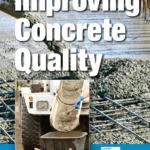 Improving Concrete Quality_بهبود کیفیت بتن
 Dynamic Behavior of Concrete and Seismic Engineering_ رفتار دینامیکی بتن و مهندسی لرزه ای